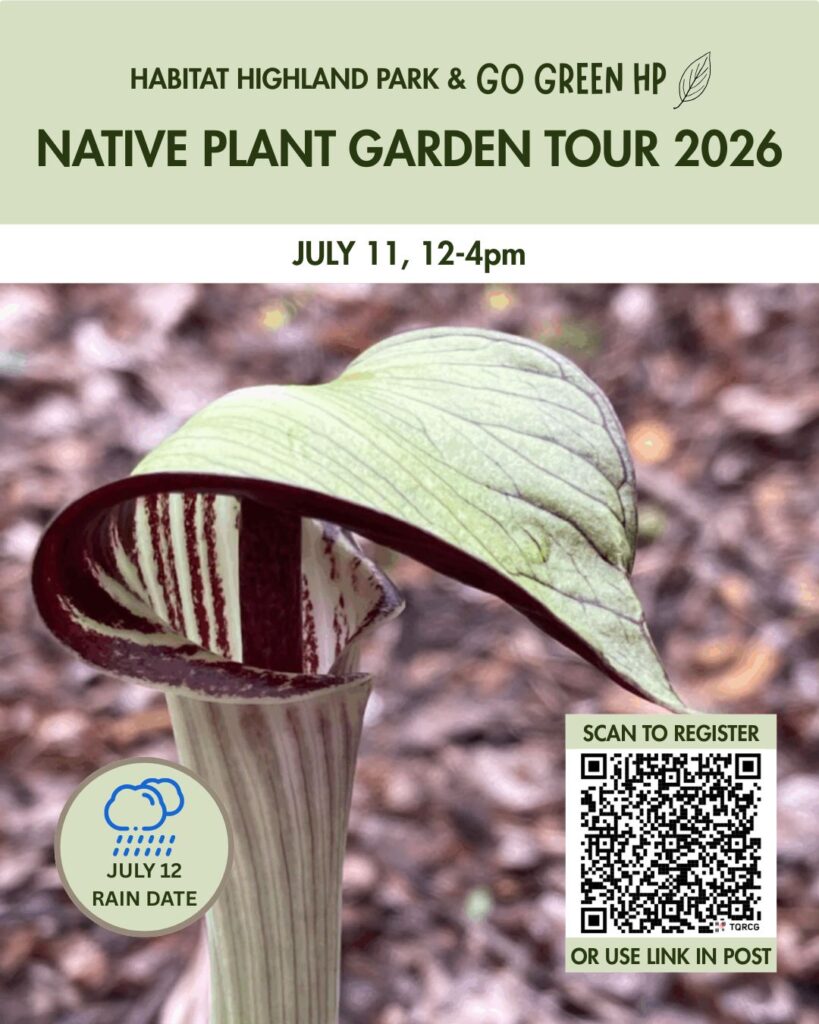
Native Plant Garden Tour 2026

Habitat Highland Park is thrilled to host our 4rd Annual Native Plant Garden Tour on Saturday, July 11, 2026 from Noon-4pm. Guests can meander through 4 yards with stunning examples of native plants and trees that enhance the properties and offer food, shelter and way stations for pollinators like birds, butterflies, and moths.

Homeowners share their best or hardest parts of “going native.” Whether coming for inspiration or just to smell the flowers, all will go home energized and amazed by these fabulous yards. 

To respect our hosts’ privacy, addresses are not available at this time. Please register below to receive addresses via email on July 10.

Jessica’s Garden

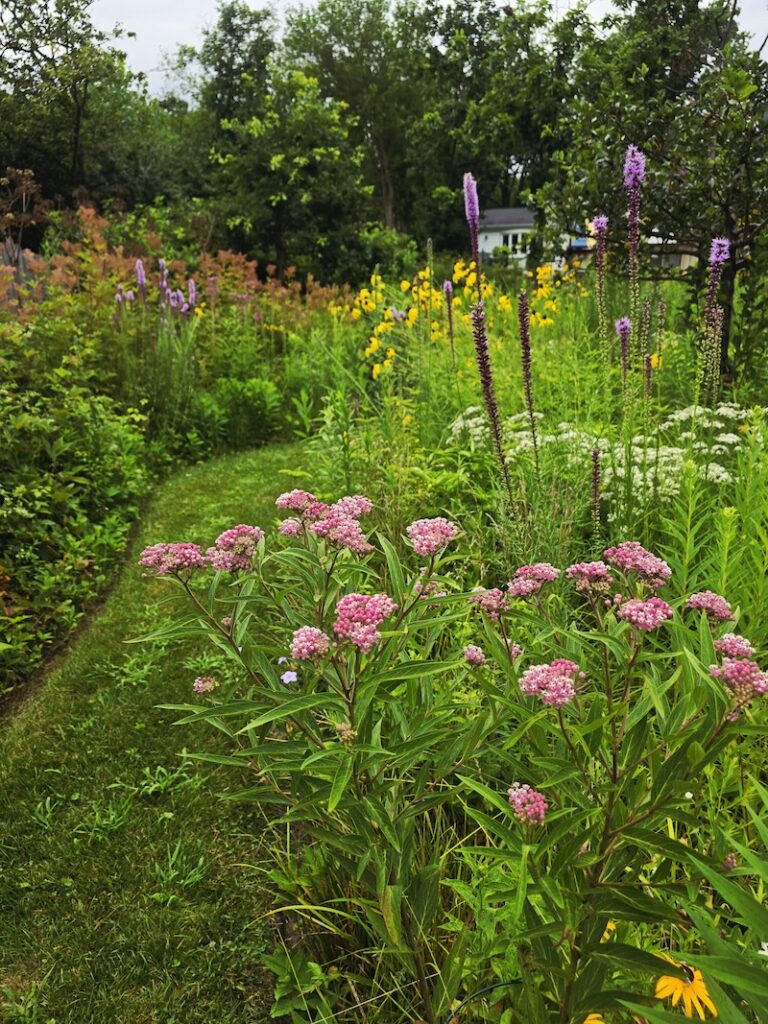
Joe Pye Weed and Blazing Star add height and color while supporting pollinators.
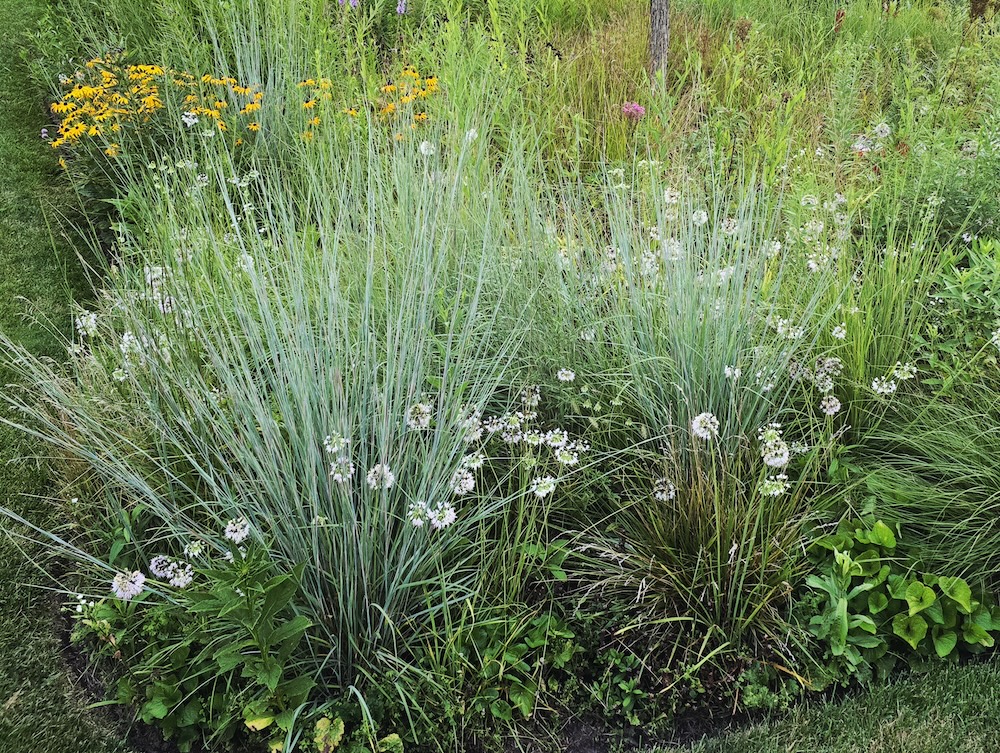
The spiky Bluestar and puffy Allium look like fireworks in the garden.
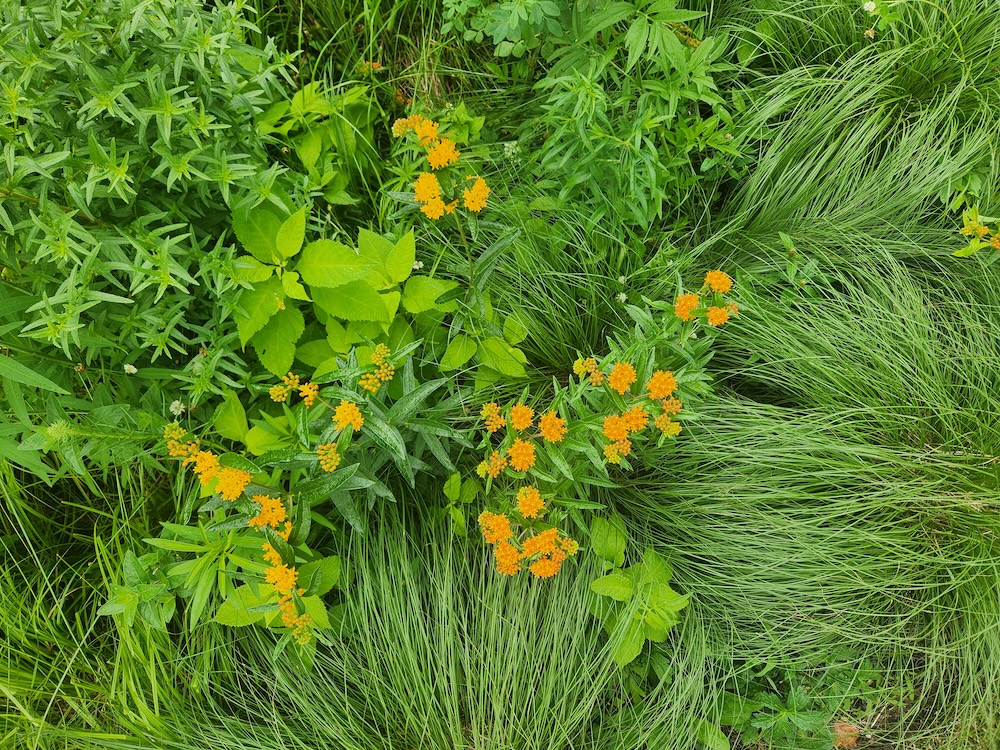
Vibrant orange flowers of Butterfly Milkweed pop against soft patches of Prairie Dropseed.

Jessica’s Garden: Meeting the Challenges of Climate Change

Jessica’s journey into native gardening began with a simple, but powerful realization: protecting nature is no longer something that happens only in distant national parks. Inspired by environmental expert Doug Tallamy, she embraced the idea that homeowners themselves play a critical role in supporting biodiversity. As Tallamy has often emphasized, the combined acreage of private residential land far exceeds that of America’s national parks. For Jessica, that insight transformed gardening from decoration into stewardship.

Her garden is now both beautiful and purposeful — a landscape designed to provide food, shelter, and habitat for pollinators and wildlife while adapting to the realities of climate change.

Because she maintains a large property mostly by herself, Jessica has grown especially fond of plants that thrive naturally with minimal intervention, while still offering dramatic seasonal beauty. Each time of year brings its own favorites. In spring, delicate Dutchman’s Breeches, Wild Hyacinth, and Trout Lily emerge as early stars. Summer introduces the striking Cardinal Flower and towering Great Angelica, while autumn belongs to the warm copper tones of Little Bluestem grass, which creates a vivid backdrop for neighboring plants.

The garden itself reflects a wide range of growing conditions. The shaded north side of the house supports woodland species, while the sunny southern exposure features sandy soil and sun-loving natives. In the front yard, flowering plants attract bees, butterflies, and other pollinators. Behind the house, expansive rain gardens help absorb stormwater while creating habitat and increasing ecological diversity.

One of the greatest surprises for Jessica has been the resilience of native plants. Despite increasingly unpredictable weather patterns, many continue to adapt and flourish. Still, climate change has introduced new challenges each year. One season may bring fungal diseases, while another invites destructive pests. Rather than relying heavily on chemicals or constant intervention, Jessica continually researches ways to encourage balance within the garden ecosystem — attracting beneficial insects and wildlife that naturally help keep problems under control.

For Jessica, gardening has become more than a hobby. It is an evolving partnership with nature, one that demonstrates how individual homeowners can contribute meaningfully to environmental health while creating spaces of lasting beauty.

Linda’s Garden

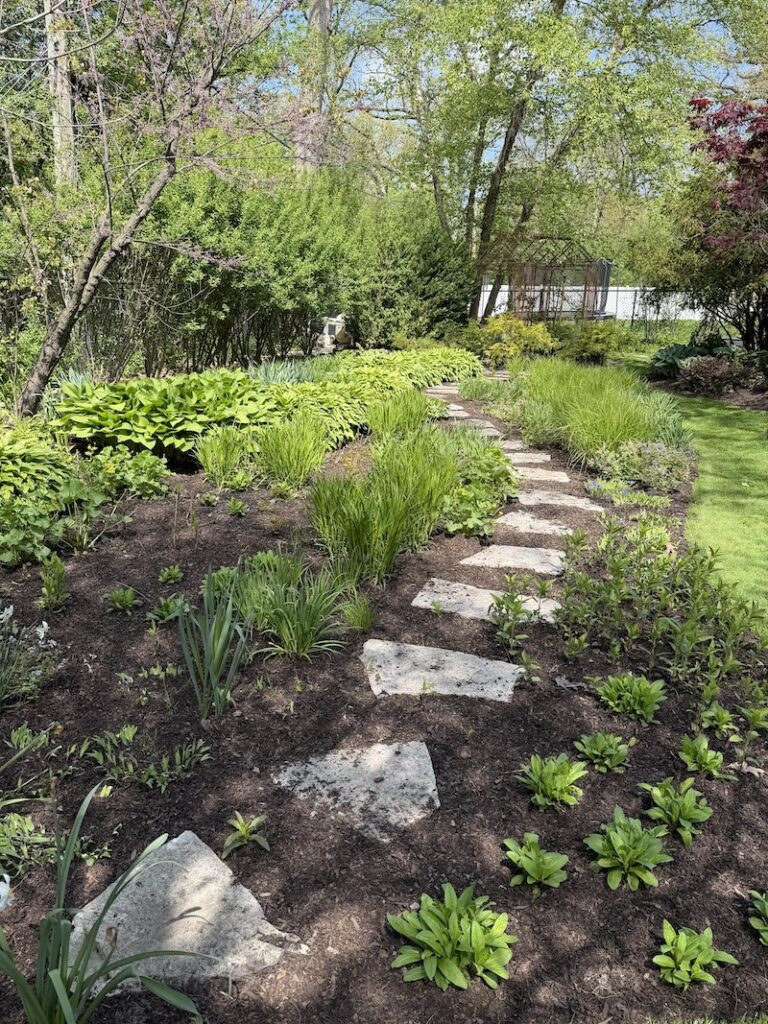
The young native plants in this wet part of the yard will soon grow deep roots to help absorb the excess water quickly.
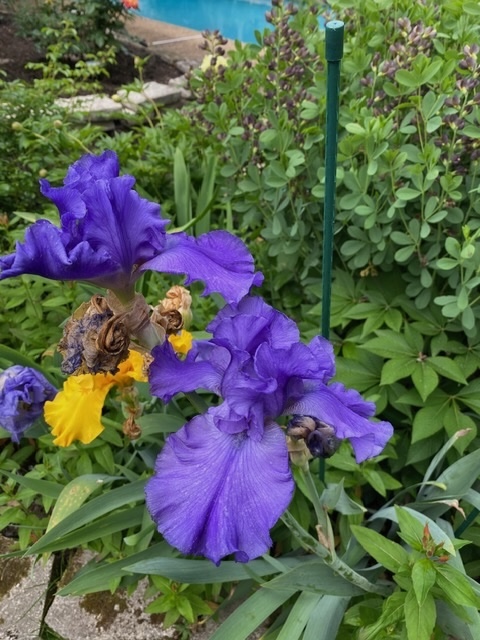
Irises and Wild Indigo bring purple power to Linda's space.
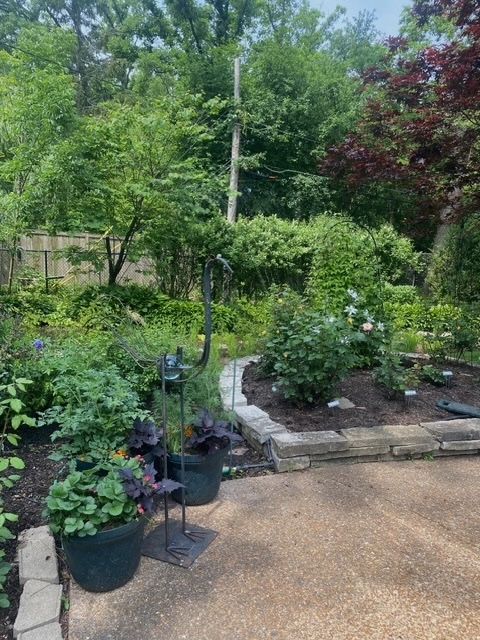
Natives can work in a variety of spaces and landscaping features.

Linda’s Garden – Imagining an Evolving Garden Palette

Linda’s garden reflects more than 30 years of thoughtful cultivation and experimentation. The front garden features large, shady borders surrounding a central lawn, while the back opens into an expansive landscape with a pool, gazebo, and distinct native garden spaces. Visitors are often surprised by the transformation that unfolds from the front to the back gardens.

Linda has gradually incorporated native plants into her landscape because they consistently performed well in her yard and added a distinctive character. For a long time, she had believed that native gardens would resemble untamed prairie landscapes, which did not fit her more intentional and structured gardening vision. That perception changed after meeting a native plant professional during the Highland Park Native Garden Tour. The experience showed her that native plantings could be elegant, sustainable, and fully integrated into a carefully designed garden.

As with all successful gardens, plant selection is governed by growing conditions. Because her property includes sunny, shady, wet, and dry areas, Linda chooses plants suited to each environment and then layers them to create waves of seasonal color, texture, and visual interest. In the native garden areas, she carefully combines plants of different heights and forms so that the landscape evolves continuously from spring through fall.

In an area where the soil is persistently wet, Linda created a meandering pathway bordered by native plants. Shorter plants line the front edges while taller species rise behind them, creating depth, texture, and a steady progression of blooms throughout the growing season.

Another challenging section runs along a fence line shaded by mature evergreen trees planted years ago to replace invasive buckthorn. This presented an opportunity experiment with woodland native plants with varied foliage, textures, and seasonal blooms.

The garden continues to surprise and delight her throughout the year. In spring, the landscape erupts with fresh green growth, daffodils, and vivid seasonal color. The newer native gardens are especially rewarding with tiny yellow and blue blossoms of thriving native plants. The shady woodland section appears so natural that it seems as though it has always existed. This season, the bleeding hearts have been especially spectacular.

Like any evolving landscape, Linda’s garden continually presents new possibilities. Buckthorn removal, for example, produced an area suddenly exposed to sunlight — a perfect opportunity to experiment with combinations of native plants, such as bluestem grasses and other sun-tolerant plantings. Linda’s is delighted by a garden whose look and feel will be refined year after year.

Mary Beth’s Garden

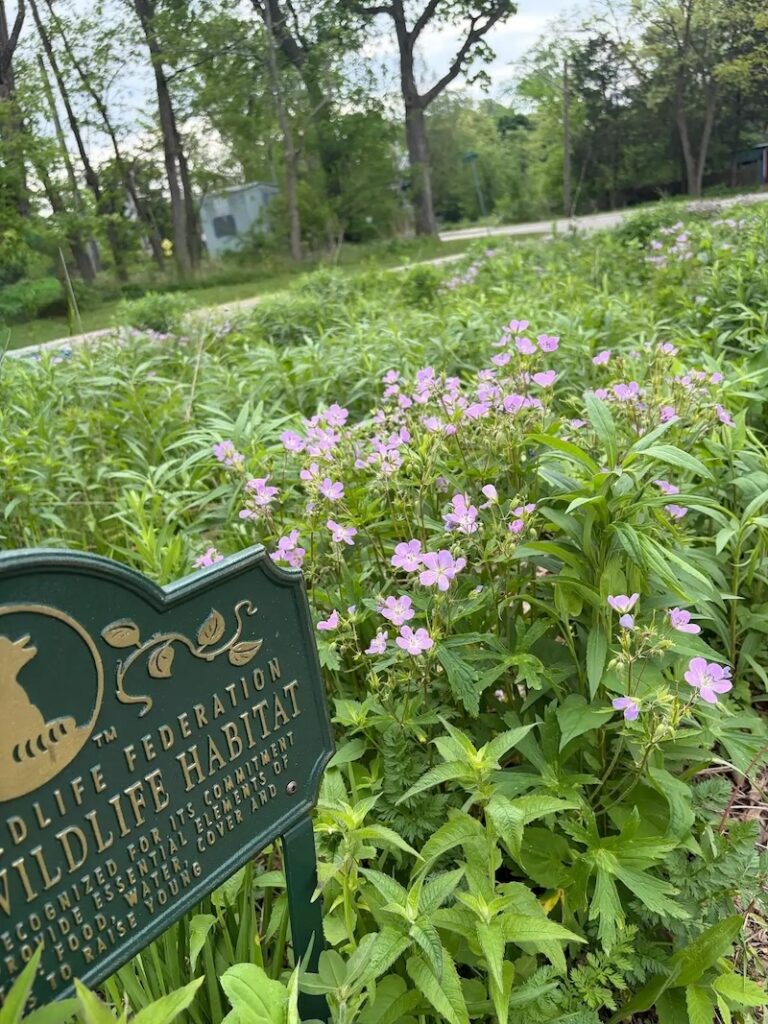
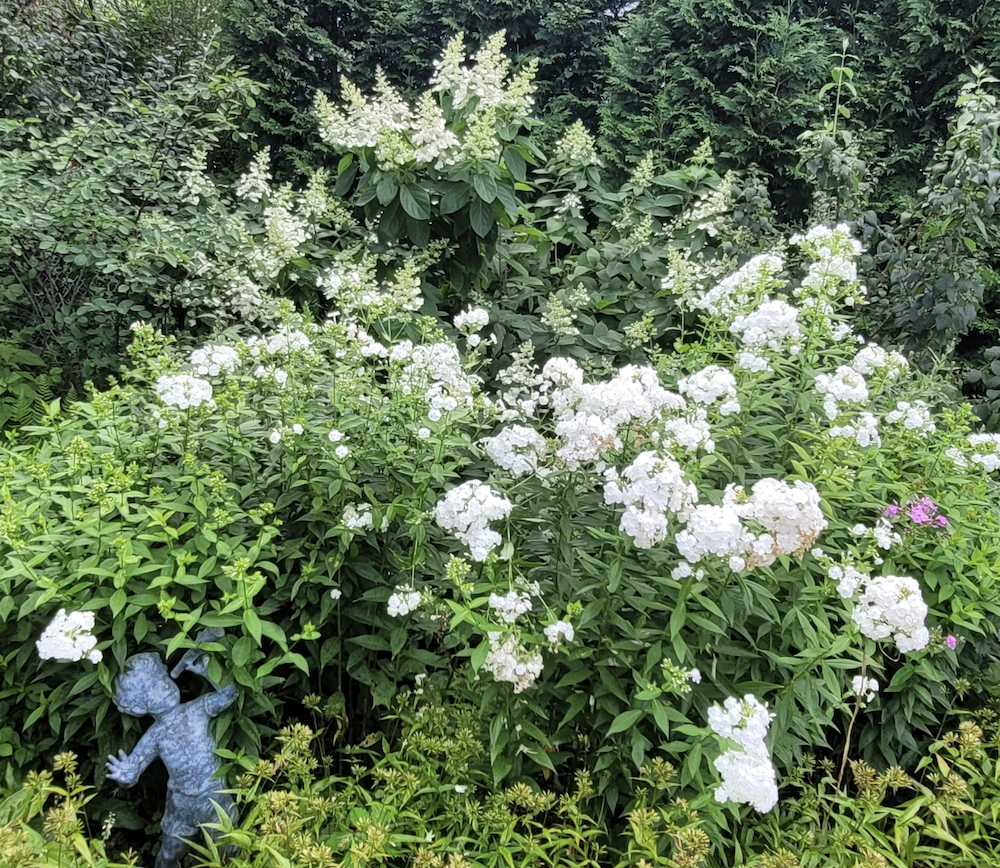
Wild geraniums are early bloomers and deer resistant.
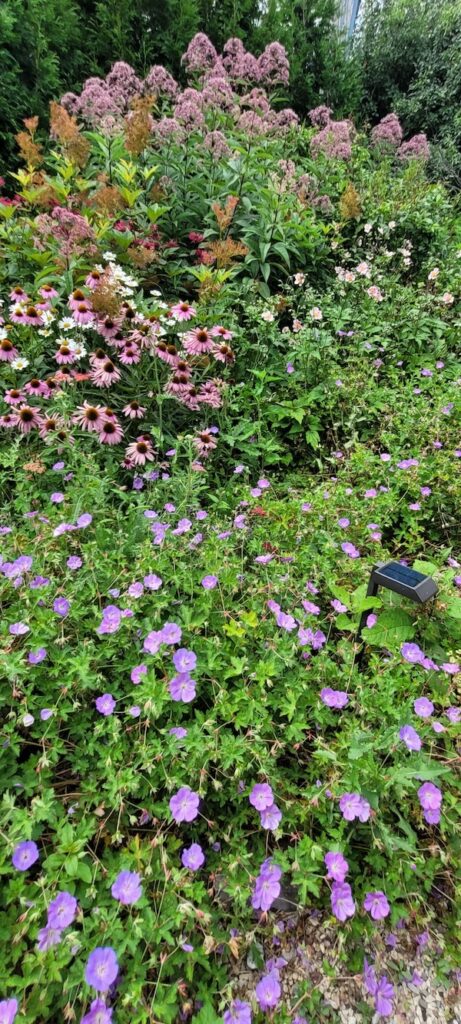
Varying heights create a tall, colorful display.
White Phlox sways happily alongside the curious young explorer.

Mary Beth’s Garden-Designing An Environmental Adventure

As an environmental science teacher, Mary Beth has long understood the importance of native plants in supporting pollinators and sustaining healthy ecosystems. Visits to Lake Forest OpenLands with her students and children deepened that appreciation. There, they observed thriving native landscapes filled with insects, birds, and wildlife. During one bioblitz event, Open Lands researchers documented more than 1,500 species within just 24 hours,revealing a richness of life rarely found in conventional suburban lawns. The experience reinforced her belief that native gardens provide essential gifts—clean air, healthy soil, clean water, and natural beauty—while helping protect species increasingly threatened by habitat loss.

During the Covid pandemic, Mary Beth finally found the opportunity to bring a longtime dream to life. Beginning with the parkway and gradually expanding throughout the yard, she transformed her landscape into a vibrant native habitat.

Because the City of Highland Park limits parkway plants to those under two feet tall, plant selection required careful planning. With full sun and heavy clay soil to work with, she explored local native nurseries in search of hardy, lower-growing species suited to the site. Among her favorites are prairie dropseed, valued for its graceful year-round texture, and the redbud tree,whose brilliant spring blossoms announce the arrival of the season.

The sunny conditions across most of the property created countless opportunities to experiment with a wide range of native species. Over time, the garden evolved into a lively and ever-changing landscape.

One of the greatest surprises has been the vigor of the plants themselves. Many grew far tallert han nursery descriptions suggested, quickly filling the garden with texture and movement. Evenmore rewarding has been the steady stream of pollinators and wildlife the garden now attracts.Initially, she worried that neighbors might object to the taller, less conventional plantings.Instead, the opposite occurred. Neighbors expressed admiration and curiosity, and many became inspired to introduce native plants into their own gardens.

The process has not been without challenges. Some species, such as Golden Alexander, struggled to establish at first, while others proved almost too enthusiastic and required careful management. Native gardening also demands patience in spring, since prairie plants emerge slowly and last season’s stems and leaves are intentionally left standing until insects have safely emerged. Yet that patience is rewarded by a garden that reaches full splendor through summer and autumn, while continuing to provide beauty and structure throughout the winter months.

Kathy’s Garden

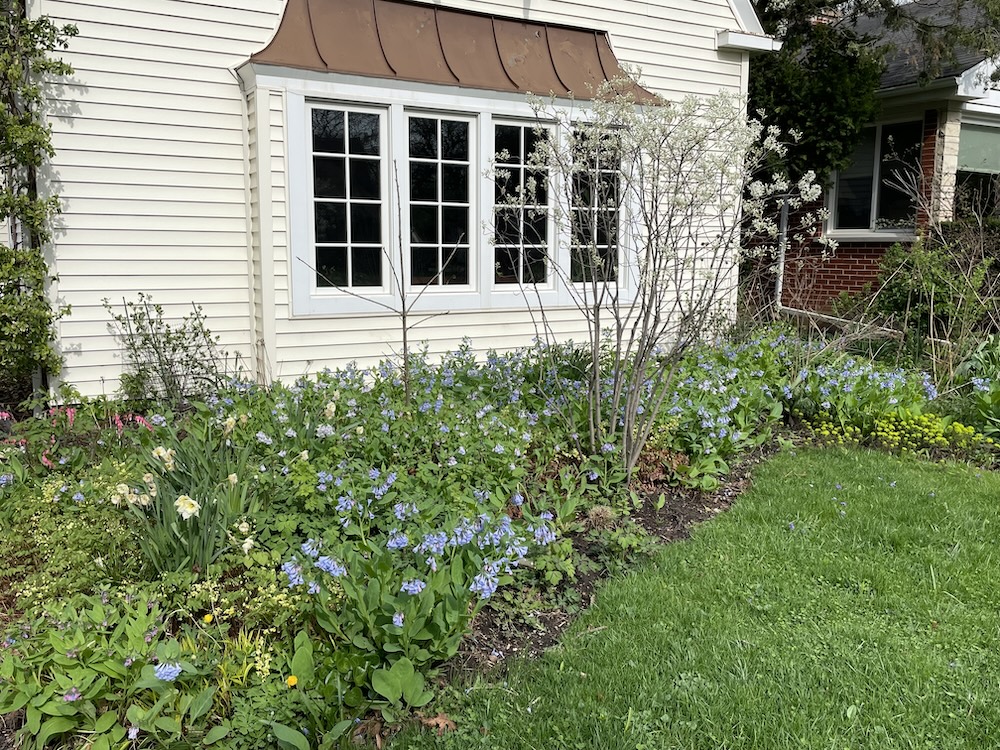
Spring ephemerals and daffodils provide a cheery spring display.
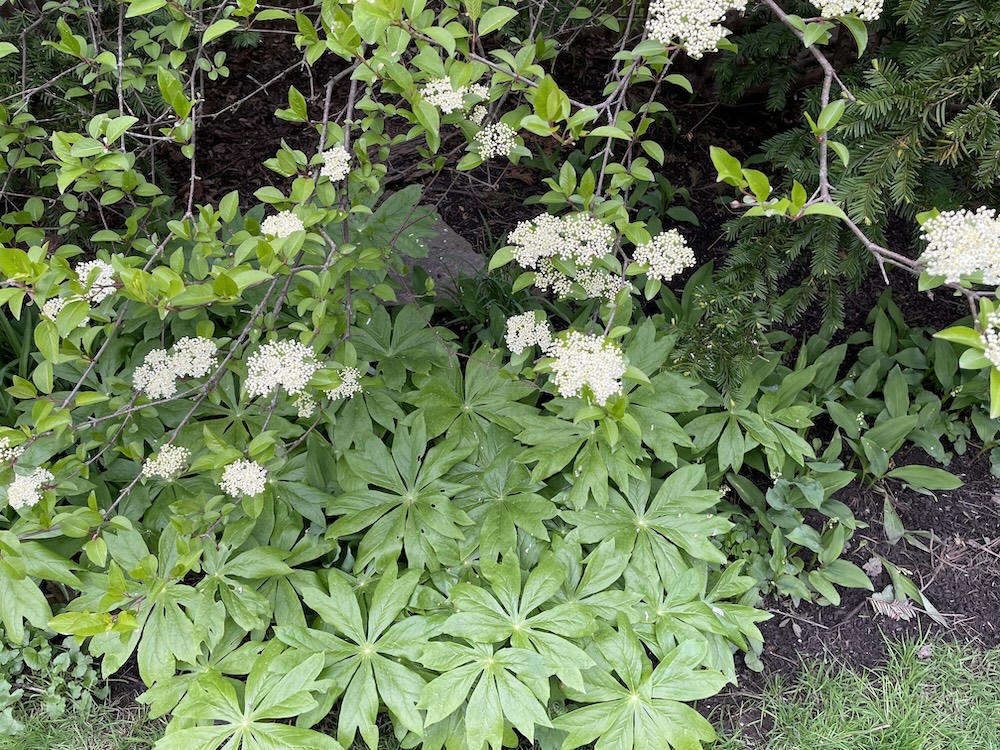
Delicate viburnum contrast nicely with the large, glossy may apple leaves.
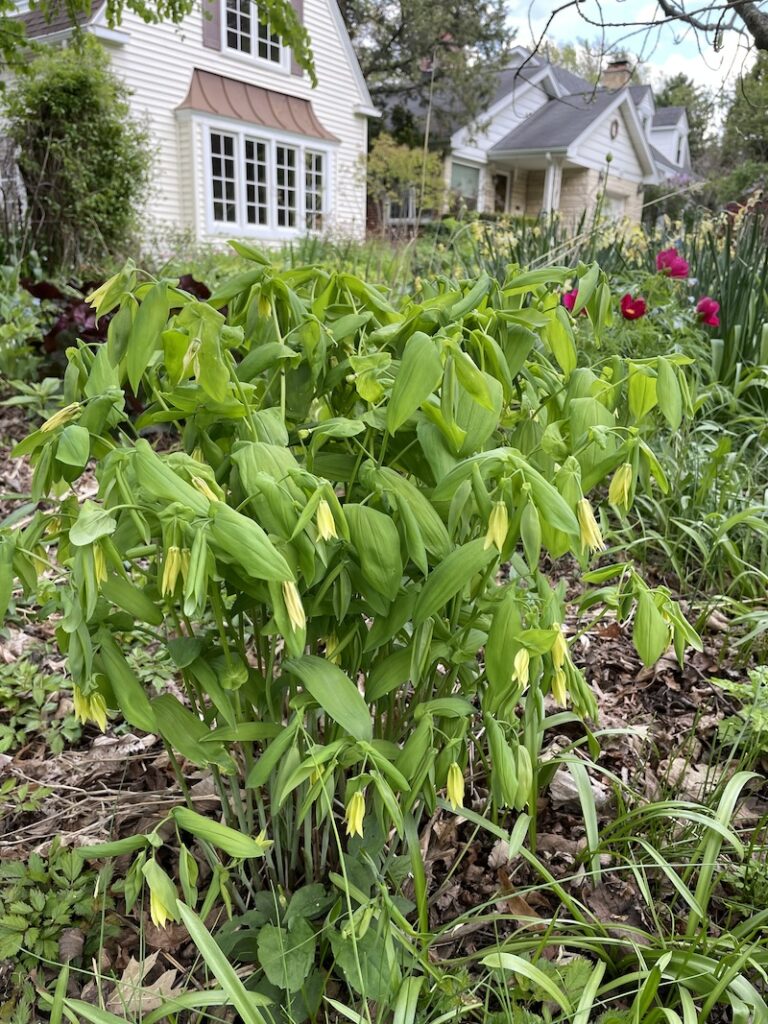
Bellwort is a less common, visually interesting addition to Kathy's garden.

Kathy’s Garden – Designing and Experimenting with Native Plants

Over the course of many decades, Kathy has carefully shaped the landscape around her home, embracing both a commitment to ecological stewardship and wildlife support and consideration of purely ornamental criteria. Long before sustainable gardening became widely discussed, she embraced organic practices, avoiding chemicals and pesticides in favor of a healthier, more balanced environment. Still, she does not consider herself a strict native-plant purist. Instead, her philosophy blends ecological awareness with artistic freedom, allowing room for experimentation and discovery

As both a gardener and designer, Kathy’s eye for beauty strongly influences the plants she chooses. While visual appeal remains important, her selections increasingly reflect a desire to support birds, pollinators, and the broader ecosystem surrounding her home. Over time, she has refined her plant palette to favor species that contribute greater environmental value while still creating a rich and visually compelling landscape.

Her garden is guided by close observation and continual adaptation. She carefully matches plants to the light, soil, and moisture conditions in different areas of the yard, always seeking to give them the best opportunity to thrive. Yet gardening, she notes, is never static. Conditions change, plants surprise, and every season brings new lessons.

What continues to delight her most is the enduring joy the garden provides year after year. Even after decades of tending it, she still finds wonder in its rhythms, colors, textures, and visitors. Each season offers fresh moments of surprise and satisfaction. 

The challenges, however, are real. Gardening with native and ecologically supportive plants requires patience and flexibility, especially when favorite plants struggle in less-than-ideal conditions. Heavy clay soil and poor drainage can complicate planting efforts, while invasive species such as Lesser Celandine and Buckthorn frequently arrive uninvited through birds, neighboring gardens, or disturbed soil. Rabbits, too, return each season with relentless enthusiasm. And, as she candidly acknowledges, gardening becomes more physically demanding with age. 

Yet those frustrations fade beside the rewards. The sight of butterflies drifting through the garden, hummingbirds pausing among the blooms, and bees gathering nectar and pollen provides a profound sense of purpose and connection. For Kathy, those moments make every challenge worthwhile.

Native Plant Garden Tour Team

After many highly successful Native Plant Garden Tours we are committed to offering this popular event annually, but we need your help! We are looking for enthusiastic individuals to help us;

  • identify new yards and contact potential hosts(4-5 per year), showcasing a variety of gardening styles
  • coordinate day-of volunteers
  • promote event through social media and other outlets
  • take photos of host sites before and during the event
  • welcome guests to host sites
  • and many more opportunities

If you are interested in learning more please contact Candice Dalrymple

If you would like to volunteer on the day of the event as a site greeter please contact GGHP